Many SEO teams run link building and GEO seeding as two separate projects. This costs money and reach, because both disciplines reinforce each other and should be seen as a unified concept. Those who understand this and structure their strategy accordingly achieve more: better rankings in search engines and, at the same time, more visibility in AI responses like ChatGPT, Gemini or Perplexity.
The Problem: Two Strategies That Miss Each Other
In practice, link building often falls under off-page SEO, while GEO seeding, if it exists at all, lands as a separate experiment in the content team. Separate budgets, separate goals, no shared measurement.
The result: link building campaigns build authority without paying attention to LLM citability. GEO content is published without receiving the distribution that AI systems need as a quality signal – distribution that classic link building could provide. Both measures fall short of their potential, even though they work towards the same goal: building visibility.
What's Behind Both Methods?
Classic Link Building
Link building means either persuading other websites to link to your own domain through quality content, or actively publishing articles on other websites. Search engines treat these backlinks as a trust signal: the more relevant and high-quality domains link to you, the better the ranking – though many other factors play a role here too.
GEO Seeding
Generative Engine Optimization (GEO) is the practice of preparing and distributing content so that it is cited by AI systems such as ChatGPT or Gemini in their answers. The focus is primarily on the article topic itself and its connection with the brand name – not the link. The key metric is Share of LLM Voice: how often the brand or domain appears in AI answers on a given topic. This requires content that is factually precise, clearly structured and easily findable on platforms from which AI systems draw their knowledge.
“GEO Seeding doesn’t start with writing – it starts with understanding which sources a language model considers trustworthy.”
Four Synergy Effects That Amplify Both Methods
1. Link Building Builds Authority – This Helps GEO Ranking
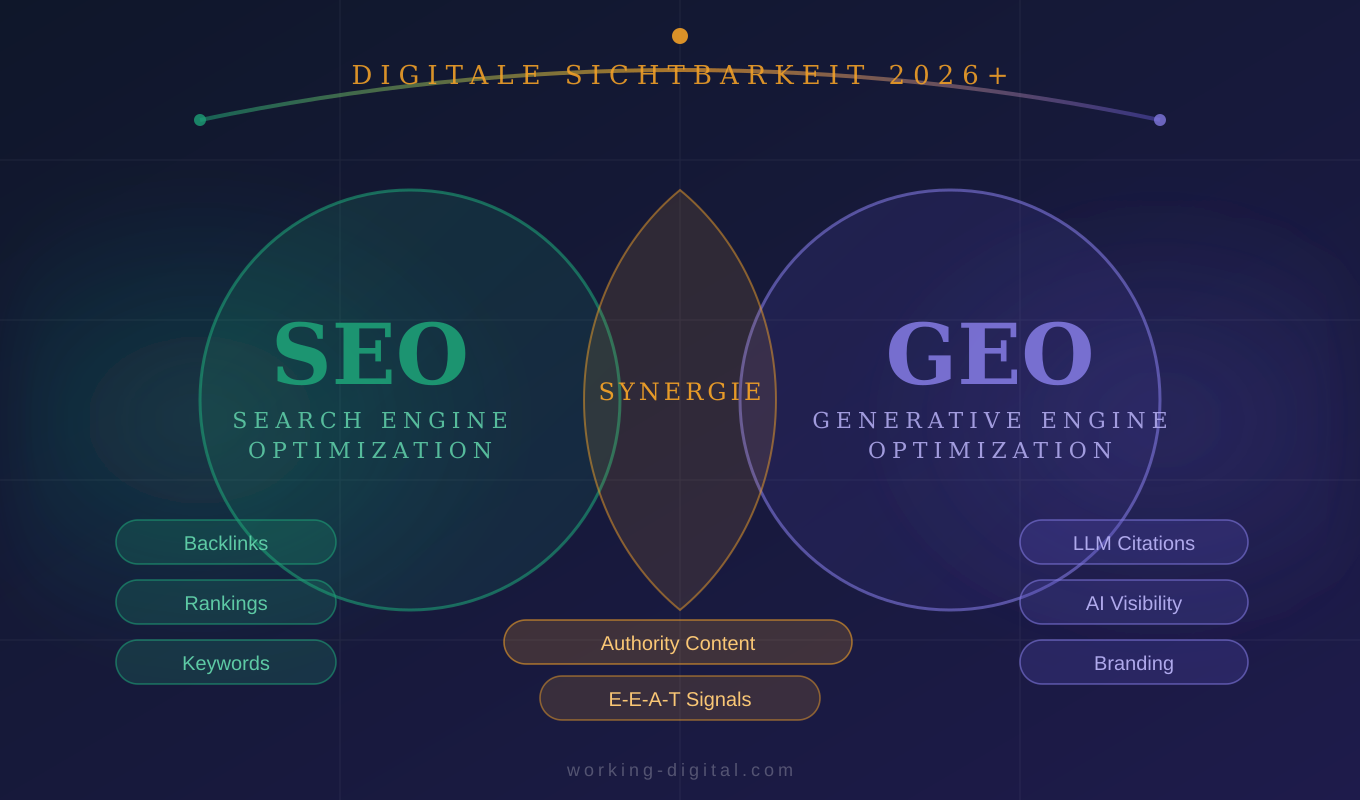
AI systems learn from the web. And the web is structured by links: pages that many high-quality domains link to appear more frequently and prominently in training data. The result is that domains with a strong backlink profile are cited more often in AI answers, even when the content is comparable to that of a less-linked page.
Domain Authority is therefore not just a Google signal, but also an indirect GEO signal. Every link building campaign that strengthens your own authority thus simultaneously contributes to AI visibility.
2. GEO Seeding Strengthens Brand Awareness – This Helps Organic Ranking
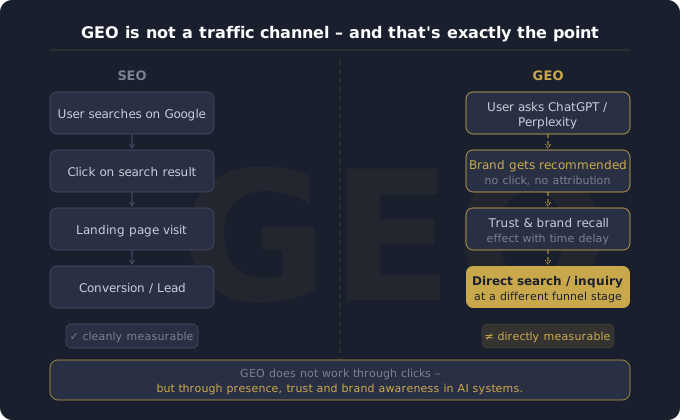
Whoever appears regularly in AI answers gets searched for more often. Users who read a brand name in a ChatGPT response subsequently google that term more frequently, boosting brand-specific searches. Google treats such branded searches as a quality signal: a brand that is actively searched for is rated as more relevant. In addition, GEO seeding often emphasises brand mentions, which increases the spread of the brand name.
GEO Seeding therefore has an indirect branding effect and, since brands are often favoured in Google search, this translates into better organic rankings.
3. GEO Content Attracts Links
Content on your own website that is designed for GEO seeding – factually precise, clearly structured, with verifiable claims – also makes excellent link targets. Journalists and editors like to link to what AI systems also cite: content that clearly answers a specific question and is supported by data or expert opinions. A well-crafted GEO article, such as a market overview, therefore often generates organic links.
4. Shared Outreach, Double Return
Outreach to specialist media is time-consuming. Anyone contacting editorial teams should use that contact for both goals: gaining backlinks and simultaneously being present on platforms from which AI systems draw their knowledge. Wikipedia, established specialist magazines and .edu domains are examples that work on both levels – as a backlink source and as an LLM citation source. The chance of securing a link placement on these outlets is also easier with a high-quality GEO article than with a standard link building article. A GEO article can therefore be a door-opener for link building too.
How the Implementation Works
The core of an integrated strategy is content that fulfils two tasks simultaneously: it serves as a landing page for classic link marketing – a target to which backlinks point – and is simultaneously structured so that AI systems pick it up as a relevant source. This works with content that clearly answers a specific question, cleanly defines terms, and backs up claims with data or sources. Such content is link-worthy and LLM-suitable for the same reason: it offers genuine added value that others are happy to reference.
The articles distributed around this anchor content follow a clear pattern: they deal thematically with the link target – the topic of the landing page – and connect this with the brand name. A guest post about GEO Seeding in B2B Marketing links to the company's own GEO Seeding service page and mentions the brand name as context. This fulfils two functions simultaneously: it gains a backlink with topical relevance that strengthens ranking. And it ensures that AI systems repeatedly see the brand name and topic in relevant context – which increases the likelihood of being cited in AI answers on this topic.
The Working Digital approach: we combine link building and GEO seeding in an integrated campaign. Our partner network covers publishers in more than 20 countries, and we place content where it generates both backlinks and LLM visibility.
Conclusion
Link building and GEO seeding are not opposites. Strong backlink profiles increase AI visibility. Good GEO content strengthens the brand and attracts links. Anyone running both separately is leaving potential on the table.